

When a family begins looking for residential care for someone they love, cost will inevitably be part of the conversation. Assisted living, frail care and specialised dementia care can represent a substantial monthly commitment, and it is completely reasonable for families to want to understand exactly what they are paying for. But residential care is not simply accommodation.
Behind a quality care facility is an entire operation running every hour of every day: trained carers, nursing professionals, meals and nutrition, cleaning and infection control, laundry, security, maintenance, activities, individual care planning and ongoing support.
At Protea Memory Clinic, we believe families should understand what quality dementia care involves so that they can make meaningful comparisons when choosing the right environment for someone they love.
Specialised Dementia Care Requires People
Staffing is one of the most important elements of residential care and one of its most significant operational costs. Residents don’t only need assistance during normal working hours. Support needs to be available during the day and night, on weekends and public holidays, 365 days a year.
This requires teams working across multiple shifts and can include registered nurses, trained carers, management, kitchen staff, cleaners, maintenance teams and other support personnel.
For someone living with dementia, having appropriately trained people nearby is particularly important. A resident may need help with bathing, dressing, mobility, eating or toileting. They may become disorientated or confused, need reassurance during the night or require closer supervision to remain safe.
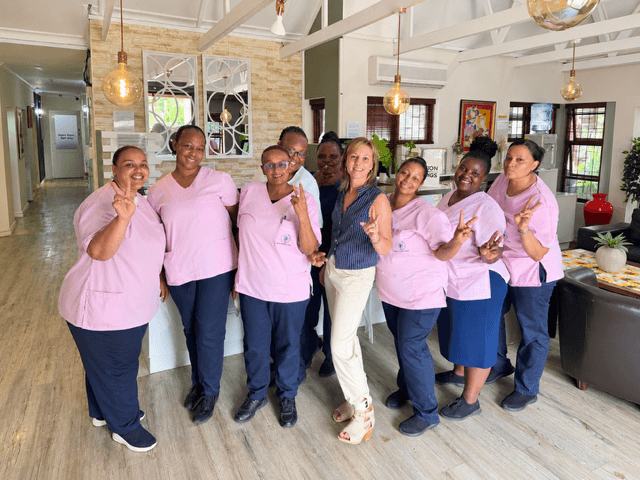
At Protea Memory Clinic, our care model has been designed around providing residents with a high level of individual attention.
A 1:2 Carer-to-Resident Ratio – With 1:1 Care Available
One of the key differences families should investigate when comparing dementia care facilities is the carer-to-resident ratio. Protea Memory Clinic’s standard care package provides a 1:2 ratio, with one carer supporting two residents. For residents who require a higher level of individual support, we also offer a 1:1 care package, providing dedicated one-on-one assistance.
Why does this matter? Having fewer residents assigned to each carer creates more opportunity for individual attention. Carers have the time to understand a resident’s
routines, preferences, personality and ways of communicating. They can assist with everyday activities and be more responsive when a resident needs additional reassurance or support.
For someone living with dementia, these details can make a significant difference to their everyday experience. It is also why families shouldn’t compare facilities purely according to the monthly fee. Two facilities may appear to offer similar services on paper while operating with very different staffing models.
Good Nutrition Is Part of Good Care
Providing nutritious food in a residential environment is about much more than putting three meals on the table. At Protea Memory Clinic, every resident receives three meals each day as well as snacks.
We also understand that older people and those living with dementia may have individual nutritional or medical requirements. Specialised diets are therefore available and are signed off by nutritionists and dietitians. This provides additional reassurance that residents’ nutritional requirements are being considered as part of their overall care.
Behind this service are the daily costs of quality ingredients, kitchen staff, preparation, refrigeration, food storage, electricity, cleaning and stringent food-safety practices. Mealtimes also offer something less tangible but equally valuable. Breakfast, lunch and dinner provide structure and familiarity to the day while creating opportunities for residents to sit together, socialise and enjoy one of life’s everyday pleasures.
Maintaining a Safe and Hygienic Home
Many of the costs involved in operating a quality care facility happen quietly in the background. Electricity, water, linen, laundry, security, insurance, equipment, cleaning products, building maintenance and repairs all form part of keeping a residential facility operating around the clock.
Cleaning and hygiene require particular attention. Older and frail people can be more vulnerable to infections and illness. At the same time, a busy residential facility has carers, nursing staff, kitchen and cleaning teams, healthcare professionals, residents’ families and other visitors regularly moving through its spaces.
Maintaining a consistently high standard of hygiene therefore requires dedicated cleaning staff, appropriate disinfecting products, regular cleaning of communal and high-touch areas, careful management of linen and laundry, and established hygiene procedures throughout the facility.
At Protea Memory Clinic, we want residents to enjoy the warmth and familiarity of a home while families have the reassurance that the environment is professionally maintained with the needs of older and vulnerable residents in mind.
Personalised Care Rather Than a One-Size-Fits-All Routine
Dementia affects every person differently. One resident may still be relatively independent but need reminders or supervision. Another may require extensive assistance with everyday activities. Others may have mobility challenges, need additional help at mealtimes or require greater levels of reassurance.
This is why personalised care is such an important part of the Protea Memory Clinic approach. Individual care plans and ongoing observation allow support to adapt as a resident’s circumstances change. Equally importantly, our carers get to know the person behind the diagnosis – their preferences, routines, personality, history and the things that bring them comfort and enjoyment.
Quality dementia care isn’t simply about completing a list of tasks. It is about providing the right support while preserving as much dignity, familiarity and quality of life as possible.
Life at PMC Is About More Than Care
A residential facility shouldn’t simply be somewhere that keeps an older person safe, comfortable and well nourished. There should still be things to look forward to.
At Protea Memory Clinic, meaningful activities are an important part of daily life, creating opportunities for residents to remain engaged and connected. Music, exercise, gardening, celebrations, creative activities and social interaction aren’t simply ways of filling time. They can offer enjoyment, familiarity, stimulation and a sense of purpose.
Our physical environment is important too. Comfortable communal spaces and our beautiful outdoor areas help create the warm, homely atmosphere we want residents and their families to experience.
Our ongoing garden project is another example of this investment in quality of life, enhancing the outdoor environment so residents have even more opportunities to enjoy nature, fresh air and meaningful moments outside.
Know What Is – and Isn’t – Included
When comparing residential facilities, families should always ask for a clear explanation of what the monthly fee covers. Certain expenses are commonly treated separately because they depend entirely on the individual resident. Medication and incontinence wear, such as adult nappies, are examples: the products and quantities required can differ considerably from one person to another.
It is worth clarifying these additional expenses before making a decision so that you understand the likely overall monthly cost.
A lower advertised fee does not necessarily translate into a lower final cost if important services, care requirements or everyday necessities are charged separately.
Don’t Compare Dementia Care on Price Alone
Cost matters, but when comparing facilities, families should also be asking:
- What is the carer-to-resident ratio?
- Is support available around the clock?
- Are nursing professionals and trained carers available?
- Is 1:1 care available if a resident requires it?
- What meals and snacks are provided?
- Can individual dietary requirements be accommodated?
- Are laundry and cleaning included?
- What activities and social opportunities are provided?
- How are individual care plans developed and adapted?
- Which expenses are charged separately?
- Most importantly, is the facility genuinely equipped and experienced in caring for people living with dementia?
These questions help reveal what sits behind the monthly figure.
What Makes Protea Memory Clinic Different?
At Protea Memory Clinic, we understand that choosing residential dementia care is one of the biggest decisions a family may have to make. Our approach brings together specialised dementia care, a 1:2 standard carer-to-resident ratio with a 1:1 option, personalised care plans, nutritious meals and snacks, specialised dietary support, meaningful activities and a warm, carefully maintained living environment.
It takes considerable resources to provide that level of care 24 hours a day. But those resources ultimately translate into something far more important: the everyday experience of the person receiving the care.
For families comparing their options, the monthly fee is therefore only one part of the decision. The more important question is: What will life actually be like for my loved one here?
At Protea Memory Clinic, our goal is to ensure the answer includes compassionate support, individual attention, dignity, comfort, meaningful connection and a place that genuinely feels like home.
References
Older Persons Act 13 of 2006 – South Africa Provides the legislative framework for residential facilities and services for older
persons. https://www.saflii.org/za/legis/consol_act/opa13o2006188/
Regulations Regarding Older Persons – National Norms and Standards Includes requirements relating to residential care, staffing, nutrition, safety and services for older persons. https://www.saflii.org/za/legis/consol_reg/rrop352/
Western Cape Government – Older Persons Programme Information on services for older persons, including assisted living and frail care. https://www.westerncape.gov.za/service/older-persons-programme
South African Government – Admission of Older Persons to Residential Facilities Information regarding residential facilities and full-time care for older persons. https://www.gov.za/services/social-benefits-retirement-and-old-age/admission-older-persons-residential-facilities