

“It is their home, and I am coming to their house.”
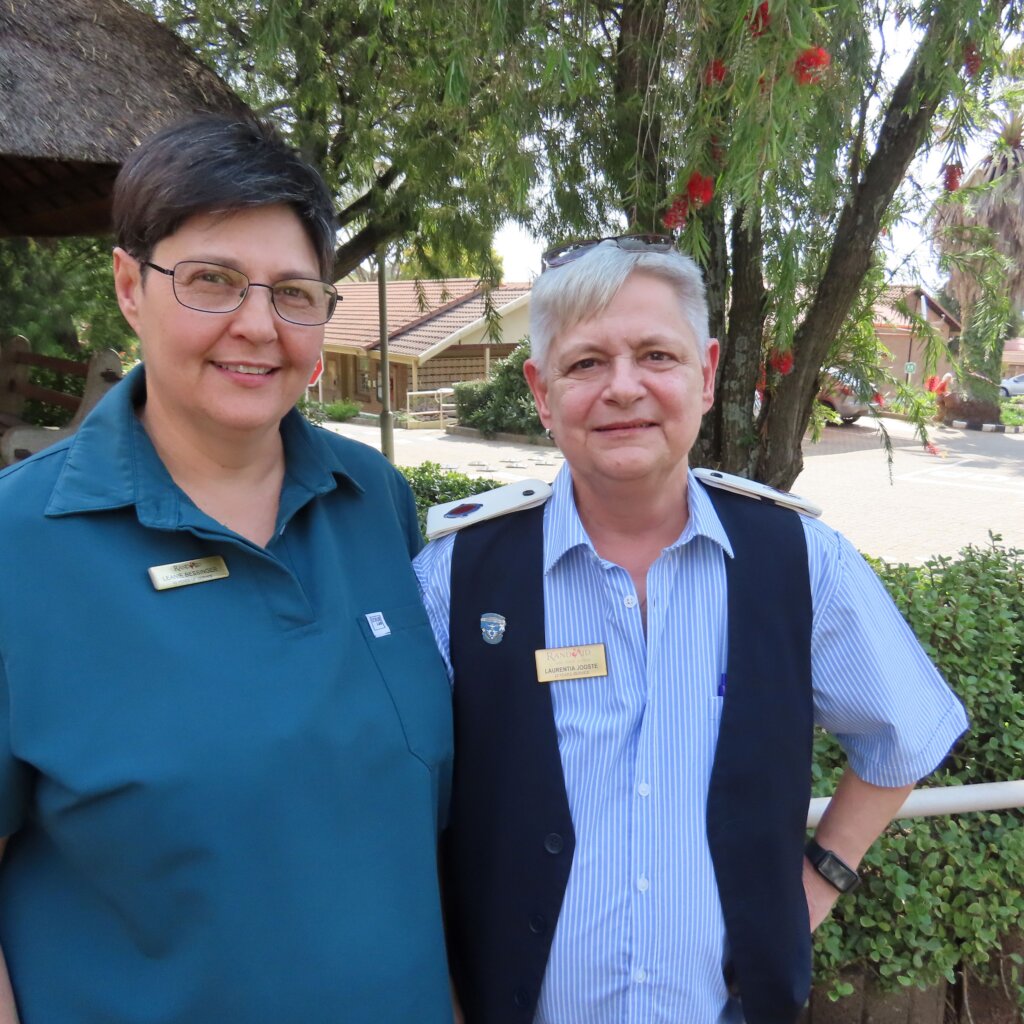
That simple change in perspective has transformed the way enrolled nurse Laurentia Jooste approaches her work at Rand Aid’s Ron Smith Care Centre (RSCC).
Laurentia has worked at the Lyndhurst care centre for 26 years, and she remembers a time when it felt much more like a hospital.
Residents were called patients. Their days followed strict routines and there was little room for individual preferences. Staff focused on the medical side of care, with less opportunity to connect with the person behind the patient.
“It was sterile and impersonal. There was no room for individuals,” she recalls.
Today, Laurentia describes RSCC as relaxed and family-like. Staff and residents have developed relationships built on trust, affection, respect and even a healthy amount of banter.
“They trust you much more now,” she says.
For Laurentia, one of the most meaningful changes is that residents are now given space to be themselves.
If a resident becomes agitated, staff can step back and allow them time to calm down rather than expecting them to immediately conform to the routine.
It is a far cry from the environment she remembers when she first started working there.
Some residents once viewed moving into care as ‘the end of the road’, particularly those who had little or no family support. Today, Laurentia says, those same residents can form close bonds with staff.
Rights and preferences are respected
The transformation is something general assistants supervisor Portia Ngobeni has also witnessed over more than two decades at RSCC.
Portia started at the centre in 2002, aged 19, working through an agency as a cleaner. She became a full-time employee in 2005 and has since worked as a cleaner, housekeeper and supervisor.
“Now, there is a huge difference,” she says.
In the past, if a resident did not want to bathe at a particular time, they could be made to do so anyway. Today, residents have choices about how they spend their days, from when they shower to what they eat.
“They are empowered. Their right is not stripped away,” Portia says.
For enrolled nurse Maropeng Mawasha, who previously worked at a clinic, that freedom is one of the things she loves most about RSCC.
A resident might want to shower and then go to the hairdresser before breakfast, while another might prefer to have breakfast first. The important thing is that the resident gets to make the choice.
“They are my boss. I will do what they want,” Maropeng says.
She sometimes becomes so engrossed in conversations with residents that she loses track of time. “I suddenly realise I am two hours over shift,” she laughs.
That willingness to stop, listen and connect is central to the way care is now delivered at RSCC.
Maropeng says she has the time and space to sit with a resident who is unhappy and try to understand the reason behind it. “I can fix the problem through talking, rather than medication or leaving them in misery,” she says.
For her, the difference is summed up in one word: Family. “It’s homely. I don’t feel like I am rendering a service. I feel that we are family.”
A journey of transformation
These personal experiences are the result of a deliberate transformation that began more than a decade ago.
RSCC was established in Lyndhurst in 1990. In 2012, it began its Eden Alternative journey, embracing a philosophy designed to address three challenges that can accompany ageing and residential care: Loneliness, helplessness and boredom.
The aim was to move away from an institutional model and create a vibrant, inclusive community where residents could retain a sense of purpose, belonging and control over their lives.
The change involved much more than introducing new activities or adjusting routines. It required physical, cultural, organisational and personal transformation.
After a four-year process, RSCC achieved Milestone One on the Eden Alternative Registry in late 2016, becoming the first organisation in Gauteng – and the second in Africa – to achieve Eden Alternative Registry membership.
The journey continued. In 2020, RSCC became the first organisation in Africa to achieve Milestone 2.
Rand Aid has maintained its commitment to the principles in the years since, with ongoing training and development aimed at ensuring the Eden philosophy forms the basis of The Rand Aid Way across its four retirement villages and two care centres.
Putting relationships first
For RSCC nursing services manager Leanie Bessinger, the purpose of the transformation was always about much more than changing procedures.
“We wanted our residents to feel valued, heard and empowered to make choices about their daily lives,” she says.
Just as importantly, the care centre needed to feel like home – a place where relationships flourish and dignity and respect are woven into everyday interactions.
Leanie says one of the most heartwarming changes has been the way relationships between staff and residents have grown and deepened.
In the past, interactions were often centred on the tasks that needed to be completed. Those tasks remain important, but there is now a much stronger focus on the person behind the care needs.
As trust has grown, residents have become more comfortable sharing their thoughts, feelings and wishes.
“There is a warmth and familiarity in many of the interactions that feels more like an extended family than a care facility,” she says.
Sometimes, it is the smallest moments that matter most – sharing a cup of tea, celebrating a special occasion, sitting quietly with someone or simply listening.
Seeing the difference
Leanie says the impact can be seen in residents’ mood and emotional well-being, with many appearing more content, engaged and connected.
RSCC has also seen encouraging improvements in resident satisfaction and participation. Increased social interaction and activity can support physical well-being, helping residents remain as active and independent as possible for longer.
But perhaps the clearest measure is visible in everyday life.
“The smiles, conversations, laughter, friendships and renewed sense of purpose show that well-being is about much more than physical health,” Leanie says. “It is about feeling connected, valued and having opportunities to continue living a meaningful life.”
Families have noticed the difference, too.
Many have expressed appreciation for the relationships that have developed between staff and residents. They value seeing staff members who know their loved one’s preferences, interests and personal stories, and who take the time to connect with them on a human level.
The shift in perspective has helped turn a place that once felt like a hospital into somewhere that feels, to both residents and staff, much more like home.
Click here for more information on Rand Aid’s Ron Smith Care Centre
Image: RSCC nursing services manager Leanie Bessinger and enrolled nurse Laurentia Jooste.